
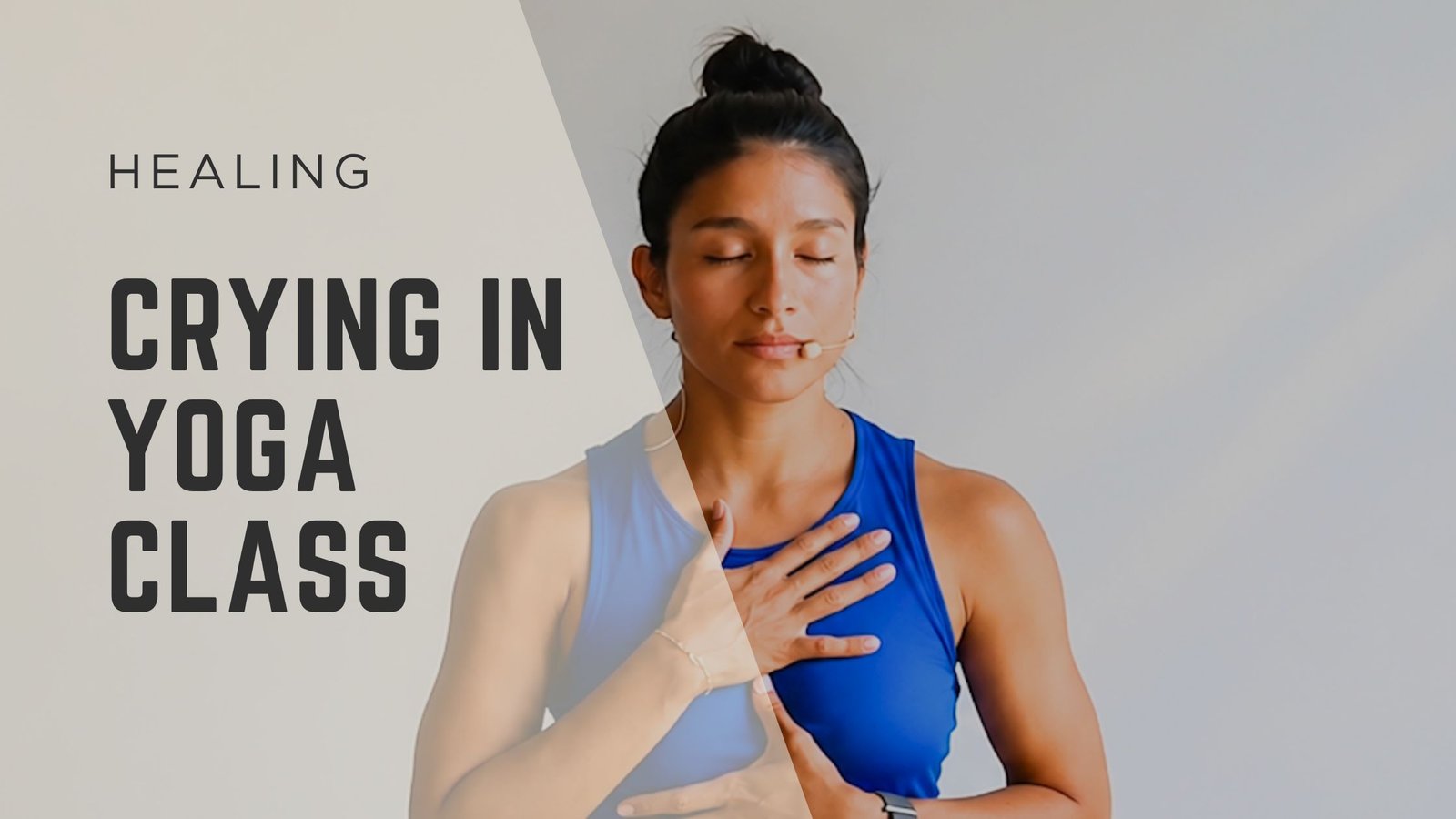
Why You Cry in Yoga Class
A scene most yoga students recognize
You’re in savasana. Class is almost over. Your body is warm, your breath has finally slowed, and the instructor is moving quietly through the room.
And then, out of nowhere, your throat tightens. Your eyes fill. You’re not sure what you’re feeling or why.
You just know that you’re about to cry in the middle of a yoga class, and you have absolutely no idea what to do about it.
If this has happened to you, you’re not alone.
In years of teaching yoga and working as a psychologist, I’ve witnessed this moment more times than I can count, students in savasana, tears moving quietly down their temples, often with a look of confused embarrassment on their face.
And every single time, I resist the urge to rush over and fix it. Because I know what’s actually happening.
And it has nothing to do with being too sensitive, too emotional, or doing something wrong.
I’m Violetaa, a psychologist and a certified yoga teacher who studied 500 hours in India.
In this post, I want to give you the full explanation, the neuroscience, the psychology, and the lived experience, of why emotional release happens in yoga, and exactly what to do when it happens to you.
“Crying in yoga is not a side effect of the practice. It is the practice working exactly as it was designed to.”
Free yoga class —> Here
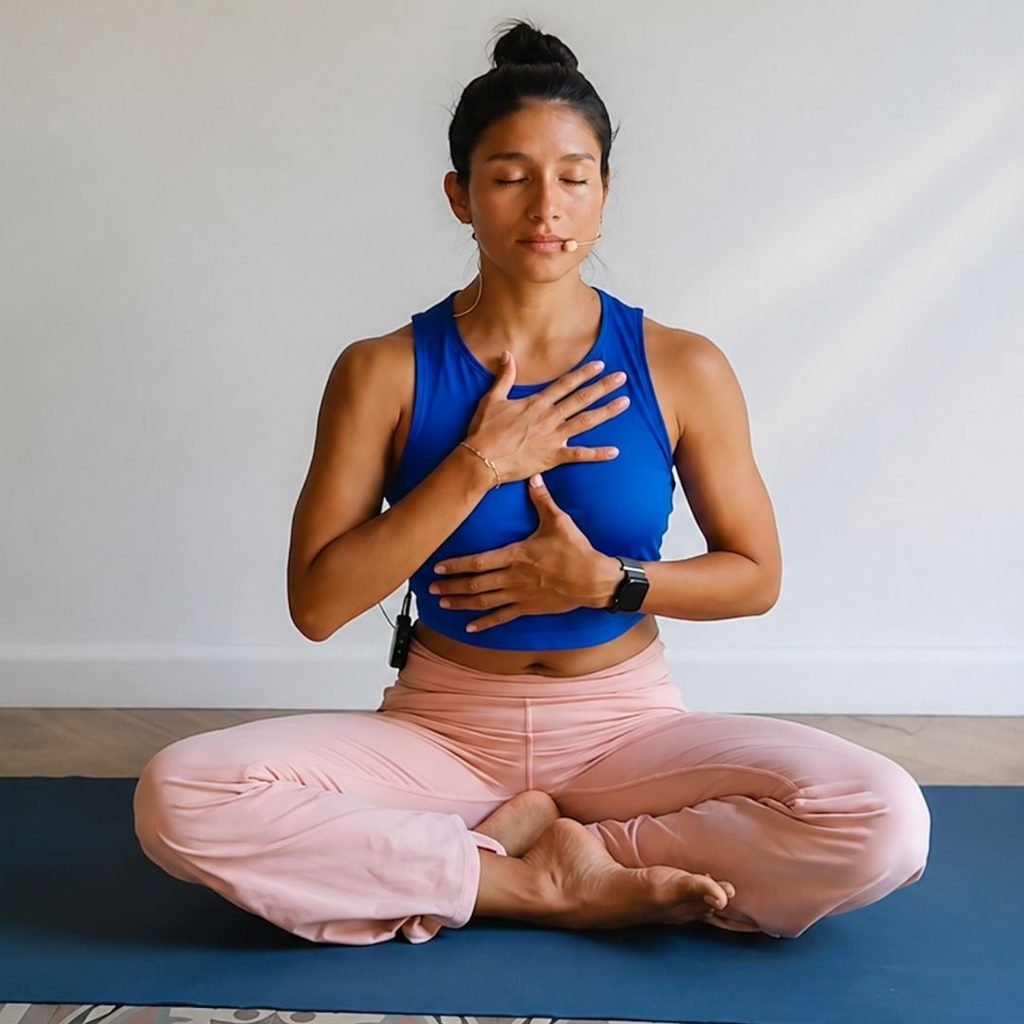
Why the Body Releases in Stillness: Why You Cry in Yoga Class
To understand why emotional release happens in yoga, you need to understand two states your nervous system moves between constantly: the sympathetic state and the parasympathetic state.
The sympathetic nervous system is your body’s activation mode, what most people know as fight-or-flight.
When it’s engaged, your body mobilizes resources to face a perceived threat: cortisol rises, heart rate increases, muscles prepare to act, digestion slows.
This is an intelligent and essential system.
The problem is that for many people living under chronic stress, which describes the majority of modern adults, the sympathetic system never fully switches off.
The body stays in a state of low-level alert, always slightly braced, always managing.
In that state, there is no room to feel.
Not because the feelings aren’t there, they are, and the body is holding them, but because the system is too busy with the business of surviving to allow processing.
Emotion requires safety.
And safety is precisely what chronic sympathetic activation prevents.
The parasympathetic nervous system is the counterpart, rest, digest, connect, recover.
When it activates, the heart rate slows, muscles soften, digestion resumes, and the body begins to signal that the immediate threat has passed.
This is the state in which healing, processing, and genuine rest become possible.
Here is where yoga comes in.
A well-structured yoga class, particularly one that sequences
breath with movement and builds toward extended stillness, creates a gradual shift from sympathetic to parasympathetic activation.
Breath by breath, posture by posture, the nervous system begins to down-regulate.
The guard drops. The chronic bracing eases.
And then savasana arrives.
For many people, it is the first moment of genuine parasympathetic stillness they have experienced all day or longer.
No phone. No task. No movement. No distraction.
The body, finding real safety for the first time, does what it has been waiting to do: it releases what it has been holding.
The tears that come in that moment are not drama. They are physiology. They are the nervous system doing its job — finally, in a space safe enough to do it.
Read > Why I do yoga even when I do not want to_
The Body Holds What the Mind Tries to Forget
There’s a second dimension to this that goes deeper than the nervous system mechanics, and it’s one that I’ve encountered consistently both in clinical practice and in my own life.
When something difficult happens, grief, stress, conflict, loss, fear, the mind has a very efficient coping strategy:
it tries to move on. It stops thinking about the difficult thing.
It stays busy. It focuses on what needs to be done. This is adaptive and often necessary.
But the body received the experience too. And the body does not move on in the same way the mind does.
Emotions are not thoughts. They are sensations, physical events that have a location in the body, a texture, a quality.
Where emotions live in the body
Feara tightness in the chest and throat, often a contraction in the gut
Griefa heaviness that sits low and wide, sometimes an ache behind the sternum
Anxietyin the throat, the upper chest, the stomach, often shallow, rapid breath
Angerheat in the face, jaw, neck and upper back, a charge in the muscles
Joyan expansion in the chest, lightness, warmth, often in the heart area
When emotions are not processed, when the mind moves on while the body keeps holding, they don’t disappear.
They accumulate. In the jaw that clenches at night.
In the shoulders that carry their tension into sleep. In the breath that never quite reaches the belly.
In the back that aches with no identifiable physical cause.
From my own experience
I was active, healthy, sleeping well, eating well, training consistently.
And I had back pain that persisted for months. I went to doctors. I checked everything I could think of.
Nothing showed up on any scan or test. No injury. No deficiency. No structural problem.
What I eventually understood, through my practice and through the psychological work I was doing was that the pain was emotional.
I had been carrying accumulated stress and tension for months, pushing past it to keep functioning, and my body had been holding the weight of what I refused to feel.
Once I stopped overriding it and started actually sitting with what was there, the pain began to fade.
Not immediately, not dramatically, but steadily, as what had been held finally started to move.
The body was not broken. It was asking to be heard. It took me longer than it should have to listen.
This is also why the body reacts to situations that feel familiar, even when the mind has no clear memory of why.
A tone of voice. A dynamic in a relationship.
A feeling in a new environment that seems outsized relative to what is actually happening.
The nervous system recognizes patterns faster than conscious thought, and it responds to them before you’ve had time to decide how you feel.
This is not irrationality. It is the body doing its job: pattern recognition in service of protection.
Yoga, by creating enough stillness and safety, gives the body a different opportunity.
Instead of reacting from old patterns, it gives you the chance to feel what is actually there, and in feeling it, to begin processing what has been waiting.
Watch: I was not doing yoga: the reality of my practice
Why Savasana Is So Often the Trigger: Why You Cry in Yoga Class
Of all the moments in a yoga class, savasana, corpse pose, the final resting posture, is the most common trigger for emotional release.
And the reason is exactly what you might guess from everything above: it is the moment of greatest surrender.
Through the moving portions of class, there is still something to do.
You can focus on the breath cue, on the alignment instruction, on staying upright in a challenging posture.
The mind has an anchor, external, manageable, present-moment. But in savasana, all of that falls away.
There is nothing to do. Nowhere to go. Nothing to fix or figure out or perform. Just you, the floor, and whatever is actually here.
For people who have spent the day, or the week, or the month, keeping busy enough not to feel, this is the first moment when the protective strategy runs out. The phone is not there. The to-do list is not there.
The movement is not there. And the body, recognizing safety, does what it has been waiting to do all along.
In my experience teaching, I’ve noticed that the students who resist savasana the most, who fidget, who leave early, who joke about it being the hardest pose, are often the ones with the most to release.
The resistance is not laziness.
It’s the nervous system sensing what might happen if it truly let go.
And the practice is precisely designed to help them get there, one class at a time.

What to Do When It Happens: Three Things That Actually Help
If you find yourself in this moment, tears arriving in class, the impulse to apologize or escape, here is what I would tell you, both as a psychologist and as someone who has been there herself.
Step 01
Don’t run, let the process complete
The first impulse is almost always to suppress it.
To stop the tears, apologize to the person next to you, get up and leave the room. Resist that impulse as much as you can.
What is happening is not an emergency.
It is your body doing something important, something it may have needed to do for a long time.
Leaving now is like walking out of the middle of a conversation your body finally felt safe enough to start.
If you can stay, stay. If you need to move to a quieter corner of the room, do that.
But try to give the process the space it’s asking for, rather than shutting it down the moment it arrives.
Step 02
Breathe slowly and deeply, and stay in the body
The breath is your anchor.
When emotion surfaces and the mind wants to rush in with questions and explanations, come back to the breath instead.
Slow, full inhales. Long, releasing exhales.
Let each breath be an act of permission, permission to feel what is here, permission to stay, permission to let this moment be what it is.
You don’t need to understand it right now.
You don’t need to trace it back to its origin or figure out what it means.
You just need to breathe and stay. That is enough.
The breath keeps you in the body, which is exactly where this process needs to happen — not in the analyzing mind, but in the feeling body.
Step 03
Let understanding come later, in journaling or reflection
After class, not during, is the time to bring the mind in.
I journal after almost every practice, and I particularly encourage it after practices where something strong arose.
Some questions worth sitting with: What was happening in my body during that moment?
Do I recognize this feeling from elsewhere in my life?
Is there something I have been carrying that I haven’t let myself fully feel?
What would I want to say to myself about what came up?
There are no right answers.
The act of writing, of giving language to what the body surfaced, is itself a form of integration.
You are translating a body experience into something the mind can begin to work with.
That translation is where the healing deepens.
The next time you feel the tears coming in class, I want you to remember this: your body just found safety.
Maybe for the first time all day. And it’s using that safety to do what it has needed to do for a long time.
That is not a problem. That is the whole practice, right there.
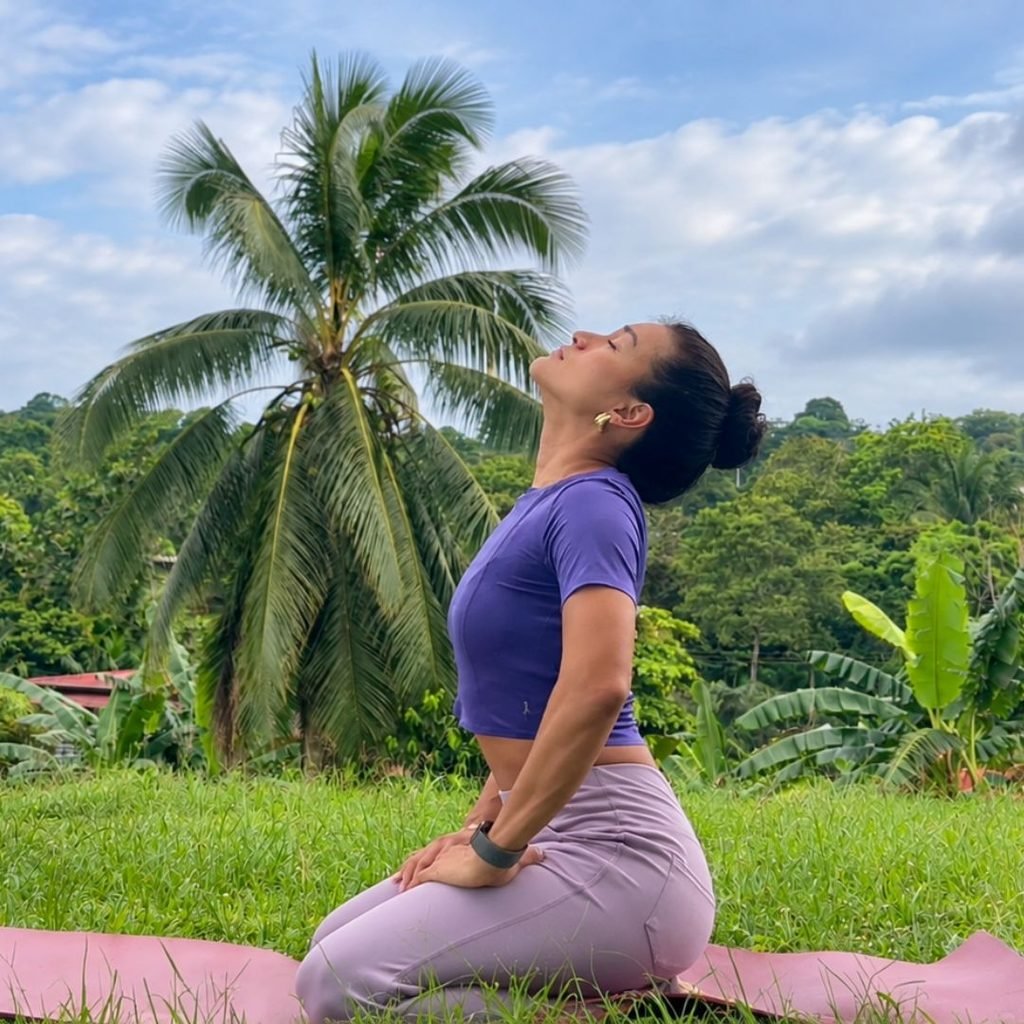
This Is Not a Side Effect, This Is the Point
We come to yoga with many expectations. Flexibility. Strength. A calmer mind. A more peaceful day.
And yoga offers all of these things, eventually, with consistent practice. But the path to those outcomes runs directly through the difficult moments, not around them.
The peace that yoga eventually cultivates is not the peace of having avoided everything hard.
It is the peace of someone who has learned to be present with difficulty without being destroyed by it.
Someone whose nervous system has learned, through thousands of breaths and postures and moments of staying, that it can handle what life brings.
That feelings, even the overwhelming ones, are survivable. That stillness is safe.
Crying in yoga is one of the most honest and courageous things a body can do.
It requires enough safety to let the guard down, enough presence to feel what is there, and enough trust in the practice to stay with it rather than flee.
These are not accidents. They are the fruits of everything the practice is building, slowly, quietly, from the inside out.
“It takes real courage to be still enough for your body to tell you the truth. If you’ve done that, even once, you’ve already done something most people spend their whole lives avoiding.”
If any part of this resonated, I’d love to invite you into the practice.
I’ve created a free class — Open Your Heart — for exactly this beginning: reconnecting with the body, building the safety the nervous system needs, and starting to work with what’s there rather than around it.
And for those ready for a longer commitment, my 12-week Ashtanga program is built around this full picture, postures, philosophy, psychology, and the week-by-week practice of showing up for yourself.
The mat is waiting. And so is everything it has to offer.
